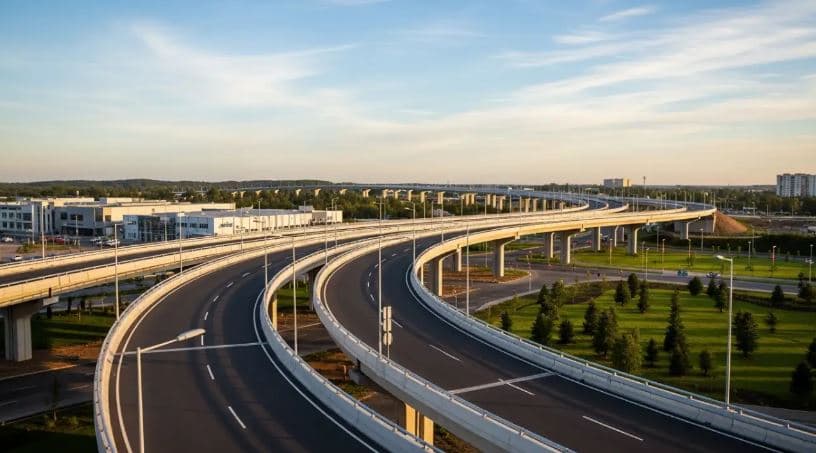
The Noida Authority has approved the construction of a ₹66 crore diamond interchange at the Bhangel Elevated Road corridor in a major effort to improve traffic flow and strengthen urban mobility infrastructure in the rapidly growing Noida region.
The proposed interchange is aimed at reducing congestion, improving connectivity between key urban sectors, and streamlining vehicular movement along one of the city’s important traffic corridors. Officials stated that the project will help eliminate major traffic bottlenecks currently affecting commuters travelling between central Noida, Greater Noida, and adjoining residential and industrial areas.
According to project details, the new diamond interchange will be constructed near the Bhangel Elevated Road section to facilitate smoother entry and exit movements while reducing signal-based delays and traffic conflicts at busy junctions. The infrastructure upgrade is expected to significantly improve travel efficiency for thousands of daily commuters using the corridor.
A diamond interchange is a grade-separated road design that enables uninterrupted traffic flow between elevated corridors and intersecting roads through strategically planned ramps and merging lanes. Urban planners often use such interchange systems to improve traffic distribution in densely populated urban regions with heavy vehicular movement.
The Bhangel Elevated Road project itself is considered a major urban mobility initiative for Noida, particularly for improving east-west connectivity and reducing congestion on surface roads passing through densely populated sectors. The elevated corridor connects multiple residential zones, commercial areas, and industrial clusters within the Noida-Greater Noida urban region.
Officials indicated that the interchange project is part of Noida’s broader infrastructure modernisation programme focused on expanding road capacity, improving traffic management, and supporting rising urbanisation across the National Capital Region (NCR). The region has witnessed rapid population growth, commercial development, and industrial expansion over the past decade.
Noida has increasingly emerged as a major urban and industrial hub due to investments in IT parks, electronics manufacturing, logistics infrastructure, residential projects, and transport connectivity. Multiple expressways, metro corridors, and airport-linked infrastructure projects are currently reshaping mobility patterns across the region.
Urban transport experts noted that infrastructure upgrades such as grade-separated interchanges are becoming essential in fast-growing metropolitan regions where rising vehicle ownership and expanding urban footprints place increasing pressure on existing road networks. Efficient traffic engineering solutions are critical for reducing travel delays, fuel consumption, and urban congestion.
The interchange project is also expected to complement several upcoming transport infrastructure developments in the NCR region, including the Noida International Airport at Jewar, expressway expansions, regional rapid transit systems, and metro network extensions. Improved road connectivity is likely to support future economic activity and real estate growth in surrounding areas.
Authorities are expected to begin detailed engineering and construction planning in the coming months, with phased execution likely to be undertaken to minimise traffic disruption during project implementation.