All-terrain cranes are witnessing growing deployment across major construction, infrastructure, industrial, and energy projects globally as contractors increasingly seek highly mobile lifting solutions capable of operating efficiently across diverse terrains and demanding jobsite conditions.
The rising adoption of all-terrain cranes reflects broader growth in infrastructure development, renewable energy projects, industrial expansion, and urban construction activity, particularly in emerging economies investing heavily in transport networks, industrial corridors, and large-scale engineering projects.
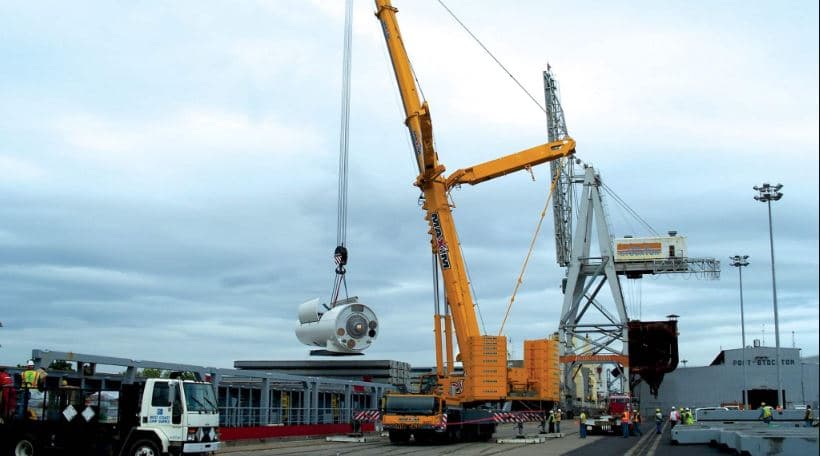
All-terrain cranes combine the road mobility of truck-mounted cranes with the off-road capability of rough-terrain machines, enabling operators to transport heavy lifting equipment directly to project sites without requiring additional logistics support. Their versatility has made them increasingly important for projects involving complex lifting operations, restricted access conditions, and multi-location deployments.
Industry experts noted that demand for high-capacity and technologically advanced crane systems has increased significantly due to rapid expansion of sectors such as metro rail construction, high-rise buildings, oil and gas infrastructure, wind energy installation, industrial manufacturing, ports, mining, and heavy engineering projects.
Modern all-terrain cranes are increasingly equipped with advanced safety systems, digital load monitoring technologies, telematics platforms, and intelligent control systems designed to improve operational precision and minimise lifting risks. Features such as automated stabilisation systems, real-time load analytics, remote diagnostics, and enhanced operator assistance technologies are becoming standard across premium crane models.
Manufacturers are also focusing heavily on improving fuel efficiency, lifting performance, transport flexibility, and environmental sustainability. Several new-generation crane models now feature lightweight boom designs, hybrid power integration, low-emission engines, and optimised hydraulic systems aimed at reducing operational costs and carbon footprints.
The construction industry’s increasing reliance on prefabrication, modular construction techniques, and large structural assemblies has further accelerated the need for flexible heavy-lifting equipment capable of handling oversized components safely and efficiently. All-terrain cranes are particularly valuable in projects where both mobility and lifting capacity are critical operational requirements.
In India and other fast-growing infrastructure markets, all-terrain cranes are playing an increasingly important role in highway projects, metro systems, refinery expansion, smart cities, renewable energy installations, and industrial plant construction. Large-scale public infrastructure investment programmes have significantly boosted demand for advanced lifting equipment across the region.
Wind energy projects, in particular, have emerged as a major demand driver for high-capacity all-terrain cranes due to the increasing size and height of modern wind turbines. Cranes capable of lifting heavy nacelles, blades, and tower sections under complex site conditions are becoming essential for renewable energy infrastructure deployment worldwide.
The global crane industry is also witnessing rapid digital transformation through integration of IoT-enabled fleet management systems, predictive maintenance technologies, AI-based operational analytics, and remote equipment monitoring platforms. These innovations are helping contractors improve fleet utilisation, reduce downtime, and enhance jobsite safety.
Industry analysts believe the long-term outlook for all-terrain cranes remains highly positive due to sustained global infrastructure spending, industrial modernisation, renewable energy expansion, and growing adoption of mechanised lifting solutions. Equipment manufacturers are expected to continue investing in automation, sustainability, and intelligent lifting technologies to meet evolving project requirements across the global construction and industrial sectors.