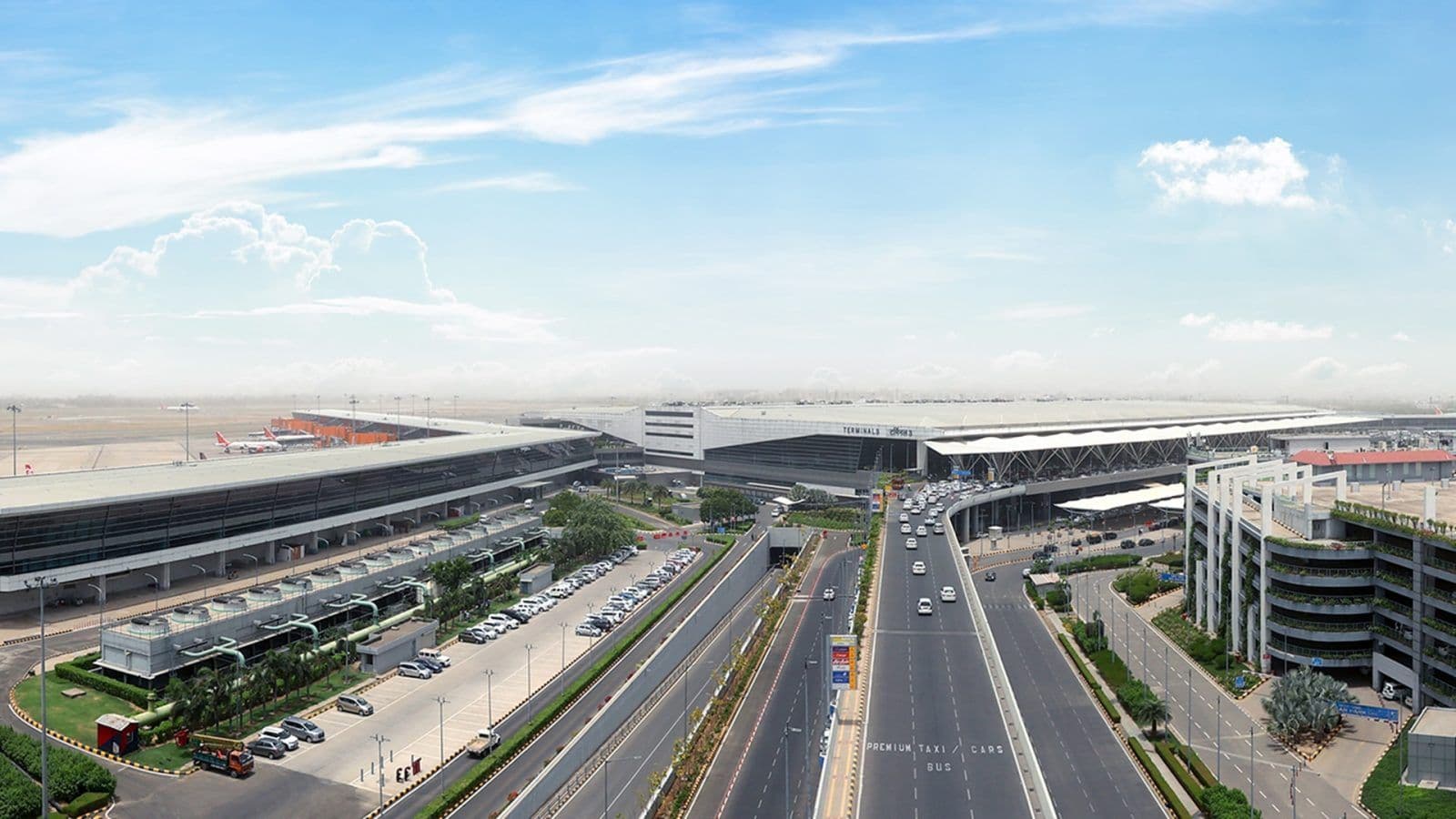
Delhi International Airport Limited (DIAL) has unveiled a large-scale infrastructure decongestion plan aimed at improving connectivity and reducing traffic pressure around the Delhi airport corridor through a combination of new road infrastructure, metro integration, and the proposed extension of the Dwarka Expressway.
The comprehensive mobility plan is designed to address rising traffic congestion around Indira Gandhi International Airport, one of India’s busiest aviation hubs, which continues to witness increasing passenger traffic, cargo movement, and urban development activity across surrounding regions.
According to project details, the proposed infrastructure upgrades include expansion of road connectivity around the airport zone, development of alternative traffic corridors, improved access routes from key NCR regions, metro network integration, and enhanced multimodal transportation systems aimed at streamlining passenger movement.
One of the key components of the plan involves strengthening connectivity through the Dwarka Expressway corridor, which has emerged as a critical infrastructure spine linking Delhi, Gurugram, and major airport access zones. Improved road integration is expected to reduce travel congestion and distribute vehicular traffic more efficiently across the region.
The proposed decongestion strategy also focuses heavily on metro rail connectivity enhancements to encourage greater use of public transportation for airport access. Improved integration between airport terminals, metro stations, urban transit systems, and regional transport corridors is expected to reduce dependence on private vehicles and improve commuter convenience.
Officials indicated that the infrastructure roadmap is aligned with long-term passenger growth projections for Delhi airport, which is expected to handle significantly higher domestic and international traffic in the coming years. Expansion of airport-linked transport infrastructure has become increasingly important due to rapid urbanisation and economic growth across the National Capital Region.
The airport corridor has experienced mounting traffic pressure from residential growth, commercial development, hospitality projects, logistics activity, and expanding business districts across Delhi, Gurugram, Dwarka, and adjoining NCR areas. Peak-hour congestion around airport approach roads has remained a major urban mobility challenge for commuters and travellers.
Urban mobility experts noted that integrated airport connectivity planning is becoming essential for large metropolitan regions where aviation infrastructure serves as a major economic and transportation hub. Efficient multimodal connectivity improves passenger movement, logistics efficiency, tourism growth, and overall urban productivity.
The broader NCR region is currently undergoing massive transport infrastructure expansion through expressways, regional rapid transit systems, metro corridors, elevated roads, logistics networks, and multimodal transit hubs. Projects such as the Dwarka Expressway, Delhi-Mumbai Expressway, RRTS corridors, and Noida International Airport are expected to reshape regional mobility patterns over the coming years.
Industry observers believe DIAL’s decongestion initiative could significantly improve airport accessibility, reduce travel delays, and support future aviation growth in the NCR region. The integrated infrastructure approach is expected to play a key role in enhancing passenger experience while supporting long-term urban and economic development around India’s largest aviation hub.