India is preparing for one of the biggest transformations in its highway infrastructure ecosystem as the government plans to phase out physical toll plazas across national highways by the end of 2026 and replace them with a fully automated, barrier-free toll collection system.
Union Minister for Road Transport and Highways Nitin Gadkari announced that the Centre is moving towards a technology-driven distance-based tolling model that will allow vehicles to travel at highway speeds without stopping at toll booths. The initiative is aimed at reducing congestion, improving logistics efficiency, cutting fuel losses, and modernizing India’s rapidly expanding highway network.
Under the proposed system, toll charges will be calculated automatically based on the actual distance travelled by a vehicle on a highway rather than through fixed toll collection points. The upcoming mechanism will use technologies such as Global Navigation Satellite System (GNSS)-based tracking, Automatic Number Plate Recognition (ANPR) cameras, FASTag integration, geo-fencing, and digital payment systems to enable seamless toll deduction while vehicles remain in motion.
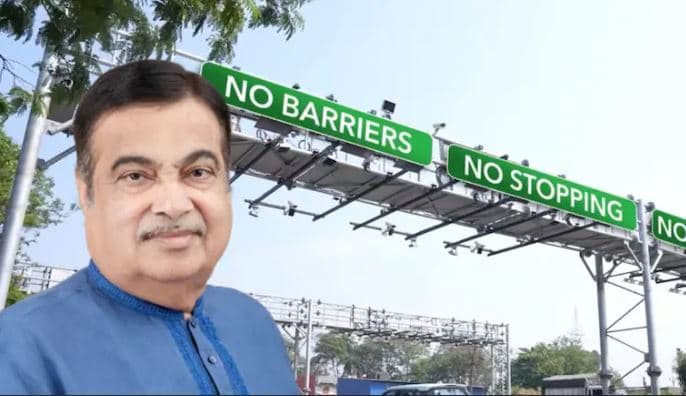
The new model is based on Multi-Lane Free Flow (MLFF) tolling technology, which eliminates the need for traditional toll booths, boom barriers, and vehicle stoppages. Instead, highways will feature overhead gantries equipped with cameras, sensors, and digital tracking systems capable of identifying vehicles and deducting toll amounts automatically.
According to Gadkari, motorists will eventually be able to drive through highway corridors at speeds of around 80 kmph without slowing down for toll payments. He added that the system could also lower toll expenses for many users because charges would be linked directly to the number of kilometres travelled rather than fixed plaza rates.
Government officials said pilot implementation of the technology has already begun at selected locations. One of the key operational pilots has been introduced at the Chorayasi Toll Plaza on the Surat–Bharuch section of NH-48 in Gujarat, where GNSS-enabled barrier-free tolling infrastructure is currently being tested. Vehicles equipped with on-board tracking units can pass through without stopping, while ANPR cameras capture and process toll transactions digitally.
The proposed system is expected to address long-standing concerns associated with conventional toll plazas, including traffic bottlenecks, long queues during peak travel periods, fuel wastage caused by idling vehicles, and delays in freight transportation. Transport sector experts estimate that stopping and restarting at toll booths results in significant economic losses annually due to increased fuel consumption and travel time.
The shift towards automated tolling is also expected to improve transparency and reduce revenue leakages. Authorities believe the integration of satellite tracking and digital monitoring systems will minimise toll evasion and strengthen real-time revenue collection efficiency for the National Highways Authority of India (NHAI). According to reports, the new system could significantly increase annual toll revenue collection once fully implemented nationwide.
FASTag, India’s existing electronic toll collection platform based on RFID technology, will continue to remain an important part of the ecosystem during the transition phase. Vehicles with inactive FASTag accounts or insufficient balances may face automated notices and penalty enforcement under the new framework.
The development comes as India rapidly expands its expressway and national highway network under major infrastructure programmes such as Bharatmala Pariyojana and PM Gati Shakti. The country currently has thousands of kilometres of operational access-controlled highways and expressways, with several additional corridors under construction across industrial, logistics, and economic zones.
Industry observers believe the adoption of satellite-based barrier-free tolling could become a landmark reform in India’s transportation sector by improving freight mobility, reducing logistics costs, and creating a smarter and more efficient highway management ecosystem aligned with global intelligent transport systems.