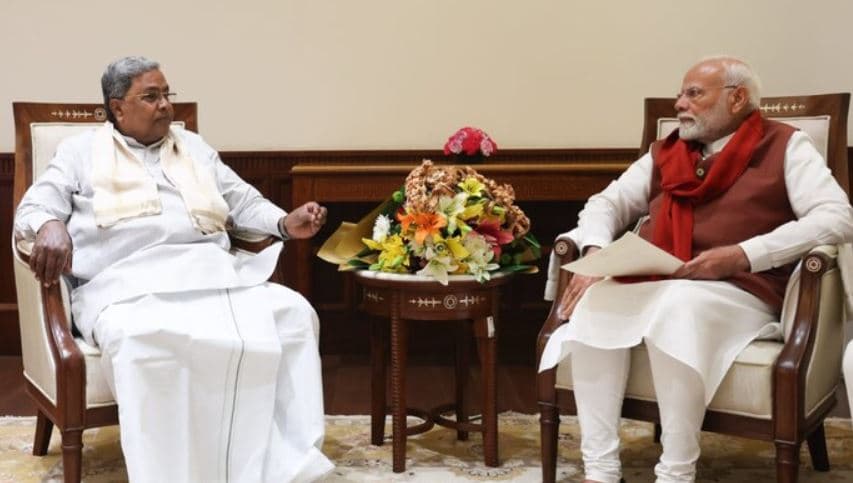
Karnataka Chief Minister Siddaramaiah has sought a special financial assistance of ₹6,000 crore for Bengaluru, submitting a detailed memorandum to Prime Minister Narendra Modi outlining a wide set of infrastructure and development-related demands for the state capital.
The memorandum was handed over during the Prime Minister’s visit to Bengaluru, where the Chief Minister highlighted the urgent need for additional central support to address the city’s rapid urbanisation pressures, mobility challenges, and infrastructure gaps. The request is aimed at strengthening Bengaluru’s position as a key national economic hub.
Along with the ₹6,000 crore special grant, the Chief Minister also raised a broader set of pending issues related to urban infrastructure, rail connectivity, highway development, and funding allocations for ongoing projects. The memorandum reflects Karnataka’s continued push for enhanced central assistance to support large-scale infrastructure expansion in Bengaluru and surrounding regions.
According to officials familiar with the matter, the state government emphasised that Bengaluru contributes significantly to India’s economy, particularly in the IT, manufacturing, and services sectors, but requires sustained investment to manage growing population pressure and transport congestion.
The demands also reportedly include support for rail and suburban rail projects, highway upgrades, and resolution of pending grant allocations, along with faster approvals for key infrastructure initiatives. The state has argued that improved connectivity and infrastructure capacity are essential to maintain Bengaluru’s global competitiveness.
The move comes amid a broader national context where urban infrastructure funding has become a key focus area, with states increasingly seeking higher allocations from the Centre to support metro expansions, expressways, and mobility projects in major cities.
The memorandum is expected to be examined by the Centre in due course, with discussions likely on how various infrastructure requirements can be aligned with ongoing national urban development programmes.